

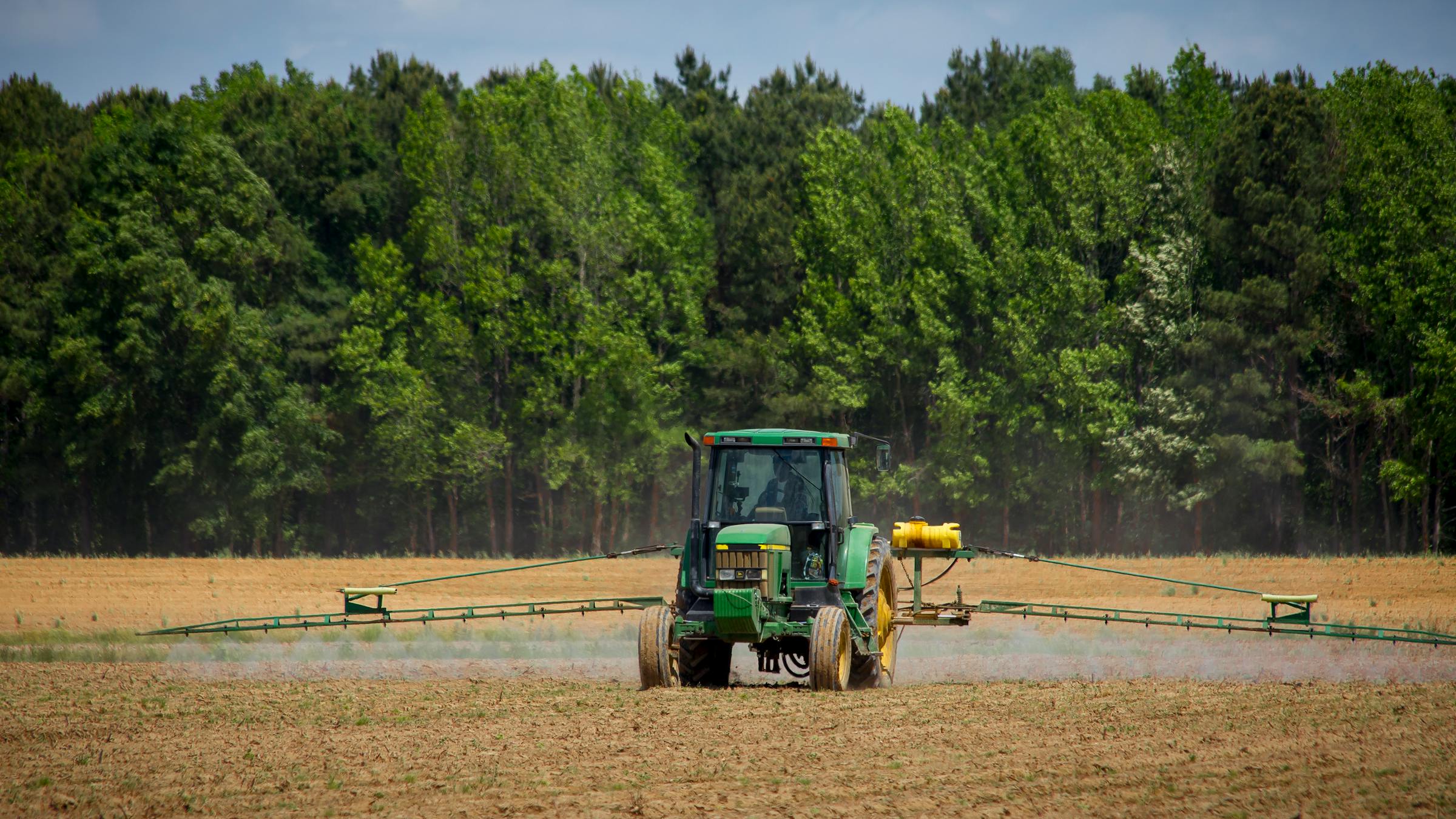
An agricultural store we've worked with for years got a phone call in March from a regular customer - a farmer who has been buying the same product for the same field for a decade. This time the order was put on hold, because the system asked for a certificate number. The customer was surprised, the seller embarrassed, and both had the same question: "since when does it have to be like this?". Since March 6, 2026. And it's not the whim of one particular store, but the result of an amendment to the Polish plant protection product regulations that brings order to the trade - including online.
The topic keeps coming back to us, because a sizable group of our clients are agricultural stores. So I decided to gather in one place what has really changed, and to separate the obligations from the myths that have grown around them.
What changed on March 6, 2026
The sale of plant protection products intended for professional users was never fully unrestricted - the Polish Plant Protection Products Act of March 8, 2013 made it conditional on holding the appropriate certification from the start.[1] The amendment that came into force on March 6, 2026 clarified these rules and - importantly - explicitly extended them to online commerce.[2]
In short, it works like this: a buyer of a professional product must present a certificate of completed training in plant protection products, or provide the number of such a certificate. The seller is obligated to verify it, and if the customer doesn't hold the certification or refuses to confirm it - to refuse the sale. This is not a seller's option "if they feel like it". It's an obligation.
The State Plant Health and Seed Inspection Service (PIORiN) clarifies that, as a rule, the seller does not copy the documents or keep records of them - the exception is fumigants, where the regime is stricter.[2] From the store's point of view, this means a specific procedure, not an archive of ID scans.
Online sales are not a duty-free zone
The most dangerous myth went: "these rules can't be enforced on the internet, so they don't apply to us". The amendment cuts it off unambiguously. Mail-order and online sales are treated the same as in-person sales, and a store selling online must collect a complete set of data from the buyer: first and last name, certificate number, the body that issued it, and its expiry date.
There are also logistics restrictions that are easy to forget when designing a checkout. Professional plant protection products may not be delivered to parcel lockers, mailboxes, or points selling food and animal feed. Some products - fumigants containing aluminum or magnesium phosphide and sulfuryl fluoride - have dropped out of online sales entirely. This means the store must be able to distinguish these categories at the catalog level and restrict the available delivery methods accordingly. Doing this by hand, with several hundred SKUs, is torture.
Where the online store fits into all this
And here we get to practice, because legal theory is one thing, and implementing it in a working store is another. A seller running a store on PrestaShop or WooCommerce faces a concrete task: rebuild the purchase path so that a customer without a valid certificate simply cannot complete an order for a professional product, while a certified customer passes through smoothly.
You can do it by hand - with a declaration in the terms of service and manual verification of every order by an employee. It works, but it costs time, is prone to human error, and doesn't scale as orders grow. That's why we automated this process for some of our clients. This is how KS SOR - the plant protection products module for PrestaShop came about: it blocks the checkout for restricted products until the customer provides and confirms their certificate data, flags the relevant products in the catalog, and restricts prohibited delivery methods for them. The solution is used today by, among others, large agricultural stores for which manual verification stopped being feasible at their order volume.
I'm not writing this to advertise our own module - I'm writing it because it's a good example of a broader principle I repeat to clients with every regulatory change: a legal obligation is cheapest to handle systemically, not with a "remember to check" procedure. A human at three in the afternoon at the peak of the season will forget. A well-configured store won't. If you're interested in how to turn such requirements into process automation in your store, this is exactly that area.
Inspections and penalties - who and for what
Trade in plant protection products is overseen by the State Plant Health and Seed Inspection Service. Its inspectors check whether a store - including an online one - verifies buyers' certifications, whether it offers products withdrawn from e-commerce, and whether it complies with delivery restrictions. Inspecting a mail-order store doesn't require a warehouse visit: some findings can be made from the website itself, by checking whether a certificate confirmation mechanism exists at all and whether a parcel locker can be selected for a cart containing a professional product.
Selling without the required verification is a violation that can end in a sanction. I'm not quoting amounts here, because they depend on the type of infringement and are subject to amendment - what matters more is that the responsibility rests with the seller, not the buyer. It is the store that must refuse to sell to a person without certification; the explanation "the customer assured us they had a certificate" won't suffice if the system didn't require their data. In the mail-order model, where there is no face-to-face contact, the only real proof of due diligence is a trail in the system: recorded certificate data linked to the order.
Professional versus non-professional - the distinction your catalog must have
The key to all compliance lies in one division: products intended for professional users versus products for non-professional (amateur) use. Only the former require a certificate. The latter - intended for home gardens, in smaller packages and with a milder profile - the customer can buy without any additional formalities.
Sounds simple, until you look at a catalog of several hundred items where these two categories sit side by side, often under similar trade names. If the store doesn't have this distinction recorded in the product data - as an attribute, a feature, or a category assignment - then no automation can be built on top of it. The system then doesn't know for which product to demand a certificate and for which not. That's why cleaning up the catalog is the first, thankless, but essential step; everything else is built on top of that labeling.
On top of that comes a layer of information obligations regulated by EU Regulation 1107/2009 and national provisions: the label, usage instructions, precautions, withdrawal periods. An online store must make this information available on the product page as diligently as a brick-and-mortar store does on the shelf - which for plant protection products means more than one sentence of marketing copy.
What this change does NOT mean
For the record, because we've received plenty of such questions too. The regulations do not ban selling plant protection products online - they bring order to it. They do not apply in the same regime to products intended for non-professional users (you can still buy amateur garden products without a certificate). And they do not oblige the store to collect photocopies of customers' documents - except for the narrow category of fumigants. Confusing these levels leads either to overzealousness that discourages certified customers, or to negligence that ends in a problem during an inspection.
What a compliant purchase path looks like in practice
The easiest way to picture it is with the example of a customer who adds a professional product to their cart. A well-prepared store recognizes the product category and - instead of letting the order through - asks for certificate data: first name, last name, number, issuing body, and expiry date. Until these fields are filled in, checkout is blocked. In parallel, prohibited delivery methods disappear for such a cart - a parcel locker or pickup at a food point stop being an option. An uncertified customer either gives up or moves to non-professional products; a customer with the paperwork gets through it in a few seconds and never comes back to the topic.
The difference between this and the manual variant is that in the automated model no employee has to remember anything, and nothing can be "waved through" in a hurry. The rule is baked into the system, works at any hour and at any order volume, and the store gains a consistent trail: which purchase, of which product, based on which certificate. It's precisely this trail that is the proof of due diligence, should it ever need to be shown. Stores selling at a larger scale usually have no alternative to such automation - manually verifying several hundred orders a day simply doesn't add up.
What to do now
If you run a store selling plant protection products, check three things. First - whether you distinguish professional from non-professional products in your catalog at all, because without that, no automation can be sensibly configured. Second - whether your checkout enforces certificate verification for professional products and cuts off parcel lockers and shipping to food points for them. Third - whether your terms of service and the store's information obligations are consistent with what the system actually does.
Compliance begins and ends with these three points. The rest is polishing. If you'd like us to look at your store from this angle, or implement verification that doesn't rely on remembering every single order - write to us. And if you'd rather first see how a ready-made solution works, visit the page of our tools for stores.
Sources
- The Act of March 8, 2013 on plant protection products (as amended) - ISAP, Sejm of the Republic of Poland.
- The State Plant Health and Seed Inspection Service (PIORiN), "Rules for selling plant protection products to professionals" (as of 2026, including changes effective March 6, 2026) - gov.pl/web/piorin.